The contact process of heliography (1822)
In 1822, Joseph Nicéphore Niépce achieved the first permanently fixed photographic image: a copy of an engraving produced through direct light exposure on a metal plate coated with bitumen.
It was not the first photograph in the modern sense—but it was proof that light could permanently inscribe an image into matter.
This process—the contact method of heliography—is the oldest known functioning photographic technique. It did not emerge from a desire to depict the world, but from a practical goal: to reproduce prints mechanically, without having to engrave them by hand.
Why Niépce developed the process
Niépce was not an artist seeking to capture landscapes, but an inventor addressing a technical problem.
Lithography, developed shortly before by Alois Senefelder, had shown that images could be reproduced through chemical processes. Niépce wanted to go further: he was searching for a method that eliminated manual engraving and could copy prints automatically.
He found the solution in the light sensitivity of bitumen—a natural asphalt that hardens under sunlight and becomes insoluble in that state.
. . .
The Materials Niépce Required for the Contact Process:
- Bitumen (Syrian asphalt / bitume de Judée), finely ground and dissolved in lavender oil
- A polished metal plate—copper, tinplate, aluminum, or tin
- An iron plate for drying the coating
- A transparent copy of the print (made using varnish or a wax solution)
- Sunlight
- Diluted lavender oil for development
The asphalt used likely came from the Mine de Pyrimont at Seyssel in the Rhône Valley, about 100 kilometers from Niépce’s estate at Le Gras.
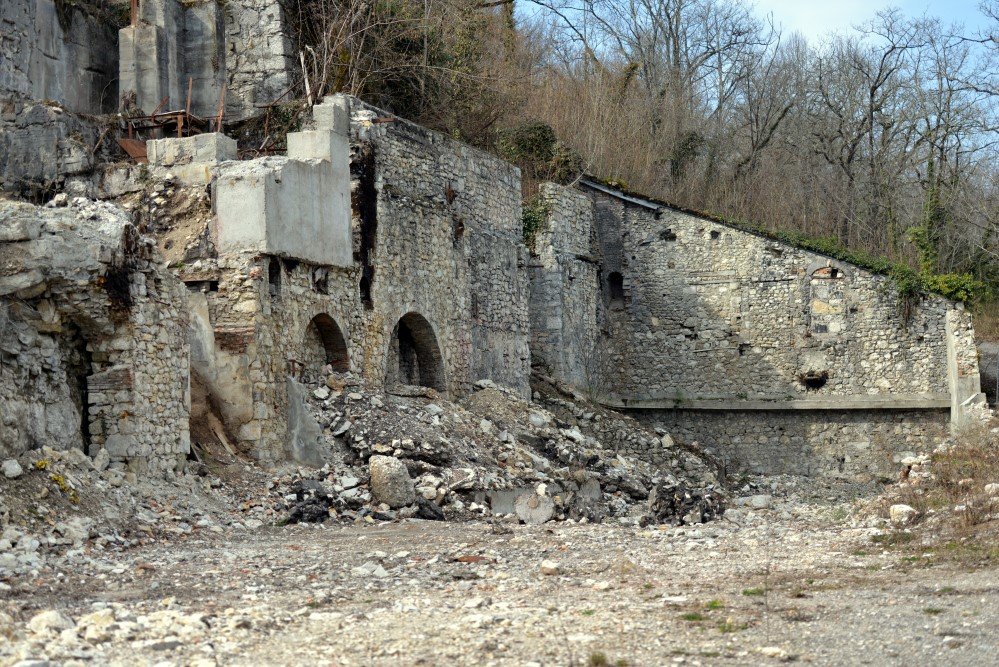
Pyrmont on the Rhône, Mine d’Asphalte
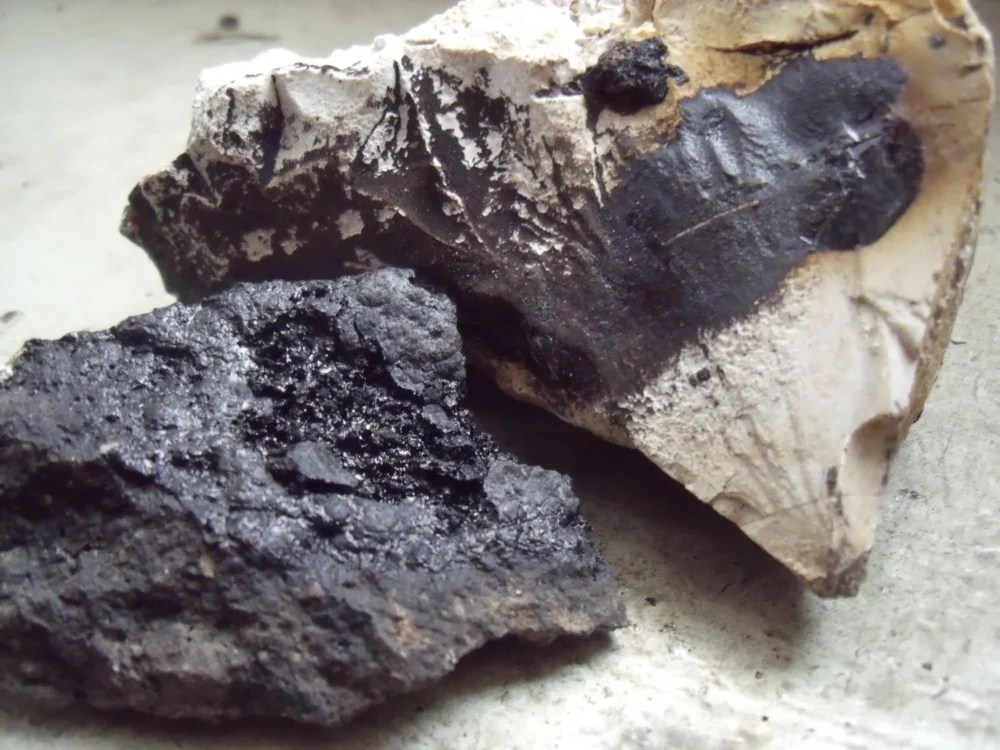
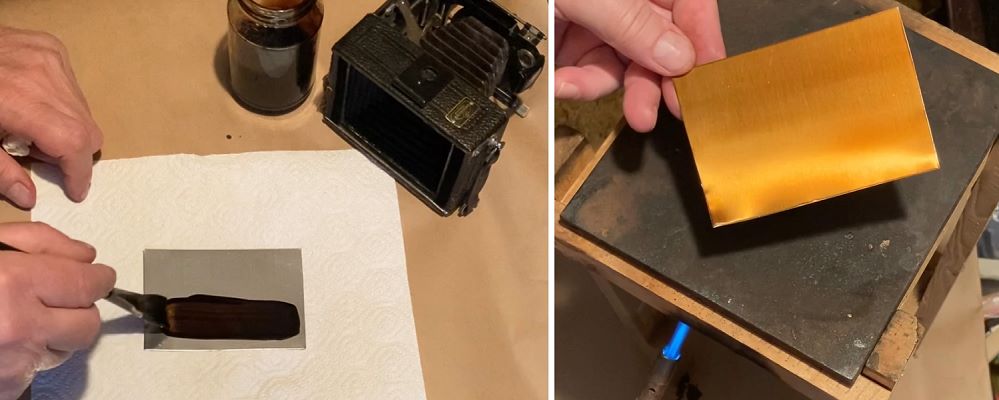
How the contact process works – step by step
- The metal plate is coated with a thin layer of bitumen dissolved in lavender oil.
- The plate is dried on a heated iron plate.
- A print is made transparent using varnish or wax.
- The transparent print is placed onto the plate and exposed to light.
- Light hardens the bitumen in the exposed (bright) areas.
- The unexposed (soft) areas are washed away with lavender oil.
The result is a permanently fixed image.
Niépce’s first surviving result using this process was, in 1822, a reproduction of an engraving showing Cardinal Georges d’Amboise. It is among the earliest photographic images ever produced.
Exposure time:
Several hours in direct sunlight—around 4–6 hours in summer conditions.
The contact process does not produce an independent image of the world — it copies an existing one. There is no lens, no camera, no perspective: the light follows the original exactly. The later camera process works differently: from around 1824, Niépce directed a camera obscura at the world and searched for a way to permanently fix the projected image — which he finally achieved in 1827.
. . .
My reconstruction — fifteen years with Niépce’s process
Fifteen years ago, I first came across Niépce’s Notice sur l’héliographie from 1829. The question would not leave me: what exactly did this process look like? How did it feel to work with it? There was hardly any literature—no detailed technical descriptions, no step-by-step instructions.
So I travelled to Chalon-sur-Saône, where Niépce lived and worked. I visited the asphalt mine at Pyrimont near Seyssel—the likely source of his bitumen. When I finally stood in front of the mine’s ruins, the entrance was blocked by iron gates. The mine had long been abandoned.
I made do with a few pieces of asphalt lying near the entrance—small, black, brittle fragments from the same geological formation Niépce had used almost two centuries earlier. This is the surface on which light first began to write.
I obtained the lavender oil in Provence, near a distillery. Its smell is sharp, almost medicinal—completely different from flowering lavender. Anyone who works with it for hours, dissolving bitumen, coating plates, washing off emulsions, carries it everywhere.
It becomes the smell of early photography.
In my studio in Stuttgart, I began the actual experiments. I ground the asphalt fragments, dissolved them in lavender oil, and polished tin plates. I found that the best emulsion is not fresh, but a few days old. I had to determine the correct drying temperature—50 or 100 degrees Celsius—the right coating thickness, and the application method. The experiments took almost a year.
In the contact process, exposure is done in direct summer sunlight for about four hours, and up to six hours in autumn. Unlike Niépce, who had to make paper prints transparent using a wax solution, I print my internegatives on offset film. The principle remains the same—the light works through the transparent carrier.

. . .
What this process means
The contact process of 1822 is not a minor detail.
It is the moment in which light first produces a permanent image—without a hand, without drawing.
From here, the entire history of photography unfolds.
And it leaves a central question:
What does it mean when light inscribes an image into matter—slowly, irreversibly, and without repetition?
. . .
Sources and further reading
- Notice sur l’héliographie, 1829, Joseph Nicéphore Niépce — Bibliothèque nationale de France, Département Estampes et Photographie
- Helmut Gernsheim, Geschichte der Photographie. Die ersten hundert Jahre, Propyläen Verlag, Frankfurt 1983
- Harry Ransom Center: Introducing The Niépce Heliograph (Jessica S. McDonald)
. . .